Jujutsu Kaizen - A Magical Guide

I like this video a lot.
I have more thoughts to offer, in this article. This is something that's been on my mind for sometime.
I don't think G. Akutami does a good job explaining JJK to those who don't get it intuitively.
I think this is because he created his own interpretation, and didn't bother explaining how it works, just like a sorcerer.
But his interpretation is sound, given certain assumptions, that are again, never explained well.

As the meme suggests, the meme itself is not useful in a meta level, at all - those who read the manga, though, will get a lot out of it. For example, Gege represents himself as that cat, in the manga.
I recommend this article for those who are not planning to watch JJK, or want to, but need a more comprehensive gateway system, with reduced to no spoilers.
I have rules that will help some people understand the whole of JJK better - the techniques, mantras, mudras, barriers, domain expansions, heavenly restrictions, and binding vows.
Before that, I will use my own definitions to start with; the JJK wiki and show has more.
Try to spot where I am going with this - this guide is magical, and only offers as much as you choose to engage with it, just like JJK.
Part I - The Words
Techniques - a way of behaving actively or passively, that has a result in reality. (hint #1)
Usually supernatural (e.g. telekinesis), paranormal (speech coercion) or super physical (physical regeneration).
Some don't have techniques, like Maki. She uses cursed objects created by others to make up for it.

Barriers - Energy to house something, just like walls.
In fact, physical objects like walls can help barricade people, or create illusions.
This makes sense from a pure energy standpoint - both walls and magnetism are forms of energy. It's just that solids are stable.
Though, this assumes you can create energy, which is a supernatural element. (hint #2)
There's also the Asian mythological concept here that houses are a barrier to those outside, or vice versa, and there are consequences for misusing that concept.
Mantras - A predefined way to invoke a technique.
I think the brain is programmed to recognize these words as an activation; so picking nonsense words, make sense.
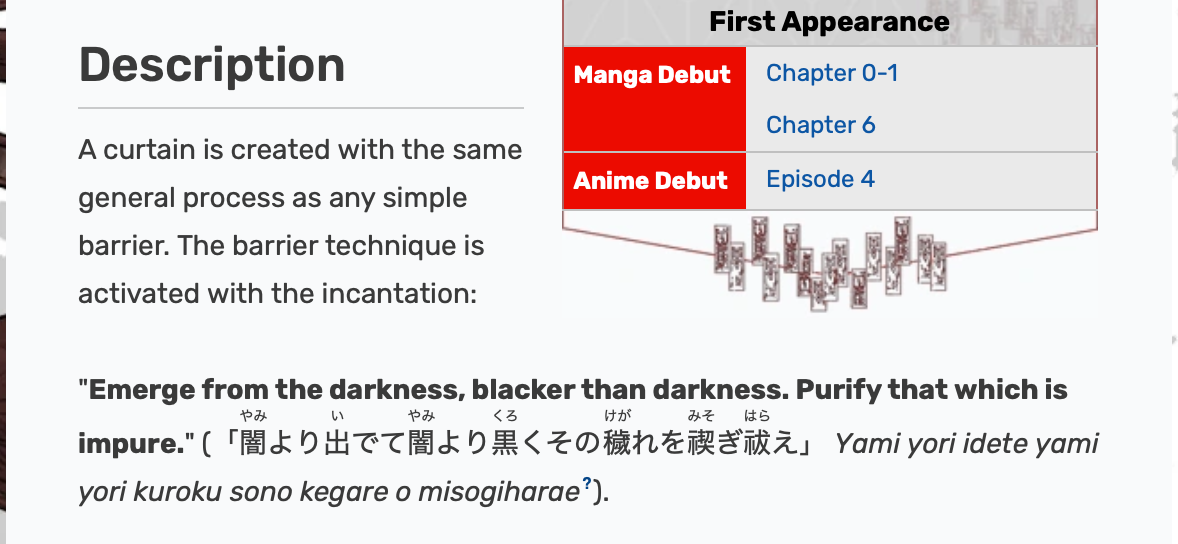
If this writes out hello world:
Console.Write("Hello World!");
Then binding h to helloWorld.exe writes out Hello World!.
So if you type help, you will actually get Hello World!elp.
Hint #3 - the brain is being programmed here, not a computer. Use common sense and wisdom when binding.
Also, if you use the same word multiple times, for different meanings, the compiler gets angry.
Mudras - Like mantras, except instead of acoustics, these are grounded in physical space.
The fact that they look weird, is the point - they carry meaning to those who use it, and are not meant to be understood. (hint #4)
Additionally, sorcerers prize secrets - to understand something is to be able to break something, too.
Think about Voldemort and Dumbledore, and how much they prize a lack of reveal.
Domain expansions - techniques within barriers, but outside the body.
This is an advanced technique, where physical space is conflated with a technique.
Typically, also an extension of the personality's psyche - plays 100% into the idea of fantasy, where once you understand something, you learn how to break it or use it.
What is the difference between theory and practice?
In theory, there's no difference. See quote source, here.
My focus: if you theorize an apple correctly, have you understood its properties - where to store it, how to eat it, and what it is not?
What is the difference between 4 and 2 + 2?
You understand the runes, 2, +, 4.
After a wise understanding of the Addition, you walk around thinking 4$ is 2$ and 2$.
Y'er a wizard!
Heavenly restrictions - Something you are born with, more or less. Uncontrolled karma.
Think of it as being born poor, and being cursed all your life.
Or, deciding to do something about it, and not have a victim mindset. Then, your childhood resilience shows up when everyone is impacted with layoffs, and you can't do something about it, but are used to such highs and lows. (hint #5)
Jujutsu Kaizen, like Nietszche, favors those who are strong and wise, not necessarily good or great.
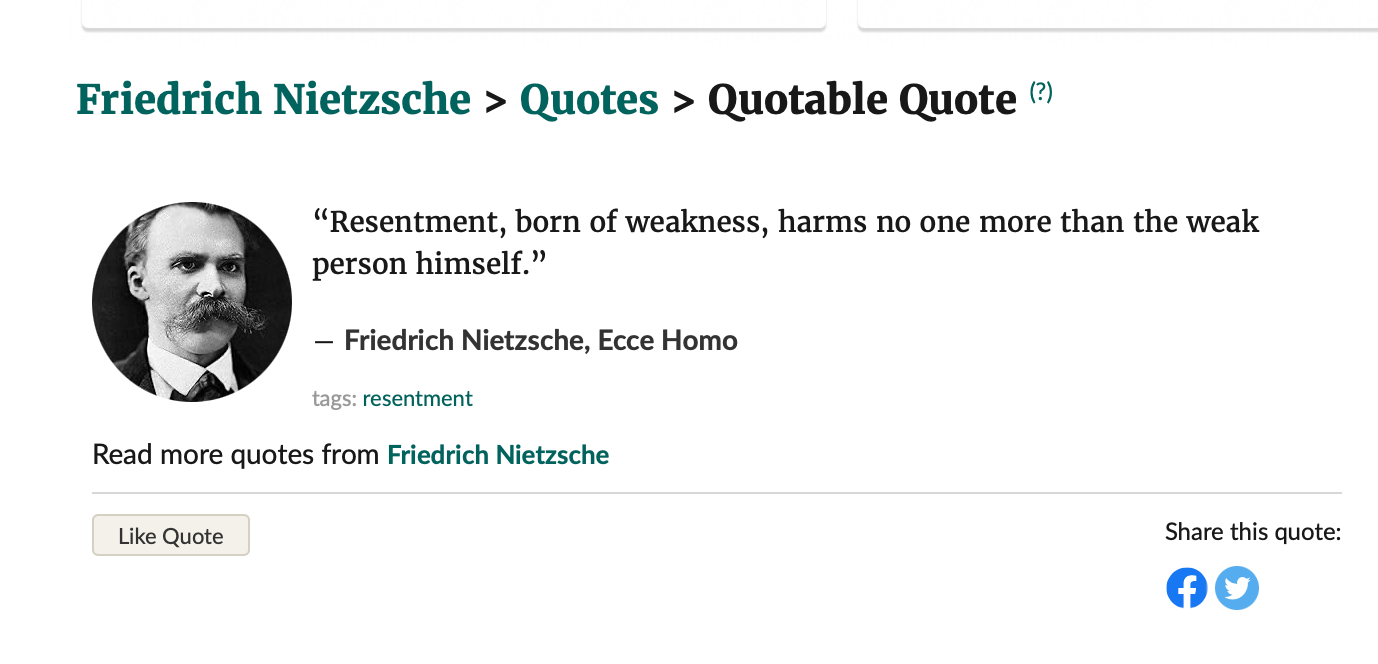
binding vows - Something that becomes true when you say it - no matter the cost.
That's it. (hint #6)

Part II - The Fuel
Jujutsu Kaizen does explain somethings, well - negative energy.
Gege argues that negative energy is generated by everyone, especially in certain spatial contexts (funerals), temporal contexts (aging) and sorcerers are trained to weaponize it.
Like a boxer who manipulates body tension and breathing, in the context of martial arts, to reduce energy and still dominate.
Things like binding vows, and mantras, are never explained.
If Part 1 is the parts of a car, then energy is the fuel.
Part III - Wisdom
Buying a car is different from driving one, or knowing when to drive, or not to drive. Or the specifics of an 18 wheeler, versus a moped. Or awareness of helicopters. So by wisdom I also mean experience and knowledge.
Let's go over the hints:
- Techniques are a way of behaving actively or passively, that has a result in reality.
- This is true of picking up a phone, too.
- You can create energy, which is a supernatural element.
- This is true of charging phones for people who haven't seen it before.
- The brain is being programmed here, not a computer. Use common sense and wisdom when binding.
- Self awareness and self knowledge are prerequisites, and not the same.
- Do you know your phone can be charged, and needs charging?
- Your choices have a role; that doesn't mean you're not useless.
- You are in a room; it's you and your phone against the current heavy weight champion. You need to survive until 911 arrives.
- Meaning is sometimes imparted; wishful thinking can become realty. Be careful what you wish for.
- You will pay 100$ for a phone charger, since you lost it and are waiting for an important interview that will give you 3000$ per month.
- Your child breaks both the phone charger, and the phone, after interrupting the call.
This is where I tie everything together, I hope you're ready.




- Sorcerers know how to use their energy internally and externally.
- They use different magic concepts (like techniques, or barriers) to get what they want.
- These concepts have both costs, and consequences.
- Good karma means someone who can weaponize karma well; not goodness of heart.
- Using these concepts well, is tied to your understanding of these concepts, other people, needed skills, and how well you execute them, in reality.
Which can be reduced to:
- Some humans are wise, skilled, knowledgable, and seek to strive past their past, or succumb to it.
- Those humans who do so magically are sorcerers.
Everything else is pure cinematic action, so I hope you enjoy Jujutsu Kaizen!

Next time you come across a scene, duel or magic application, see if you can use what I explained here, to understand that scene.
- What magical frameworks are being used - techniques or barriers?
- Techniques? What is the technique?
- Why does he think it works?
- How did it work?
Still here? I like you!
Here's a fake bonus spell
For those who read this article, I hope they understand the words in the domain of Jujutsu Kaizen, as I interpret them.
This way, they can safely enter the domain of Jujutsu Kaizen, without being confused, but instead, entertained.
I don't amplify this, at all, because this is a fake spell. Also, I am a better teacher than Satoru - amplification sends the wrong message, and pointing can show the way to the right message.
(You might think this is a contract. That's the word Jujutsu Kaizen uses, when sorcerer enters into binding agreements, with anyone else. Violating the contract violates the power itself.
From a sorcerer's perspective - the words already make sense to me, so I know I am right, as I understand Jujutsu Kaizen. In fact, I suspect G. Akutami was inspired by Neiqong and internal alchemy.
So when sorcerers use contracts, in Jujutsu Kaizen, they're already thought of in advance to solicit a predetermined result. Like a cooking recipe, or algorithm, or saying 'you can't fold a paper more than 7 times - if you fail, give me 10$'.
If you're understanding a sorcerer after the fact, you have already lost. You need to look at the source.
Additionally, wise ones pick loopholes in advance, as they know they can't cheat reality. They pick loopholes in their favor.
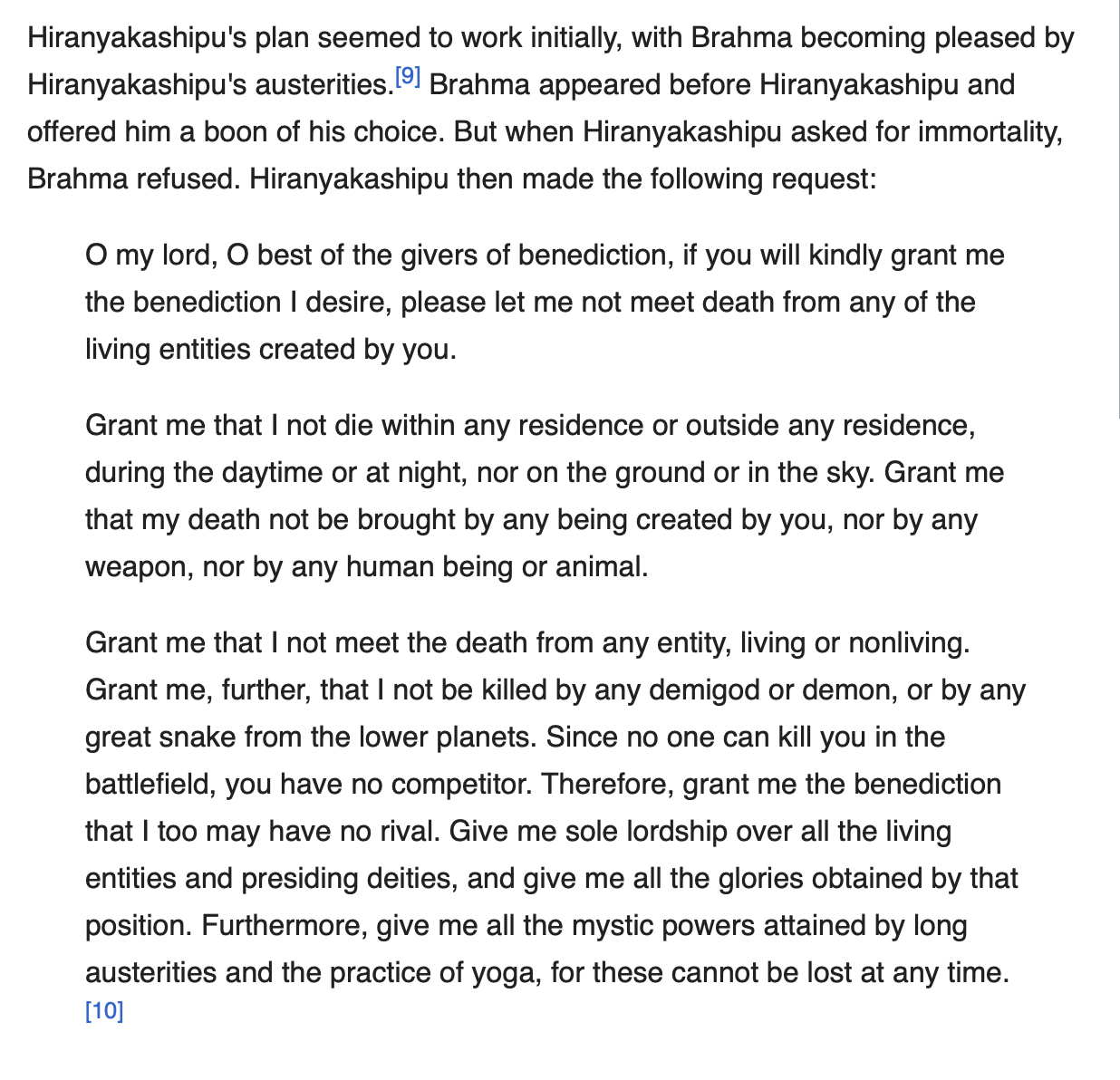
I don't choose to contract with you.
In addition, I encourage you to stop reading, and only proceed out of your own free will.
(You see this too, in Jujutsu Kaizen - it looks like I am increasing my risk by encouraging free will.
High risk, high reward - read on to understand).
Further, I put a binding vow on my article - I hope the interpretation both the reader and I share, doesn't interfere in their autonomy or mine, any further than they already wish to exercise, in pursuit of their entertainment choices.
(basically, the intent here is a useless binding vow - nothing to gain or lose for either party. It's like selling you air for 0$).
Further more, I hope the understanding you gain from this article, if it serves you well, merits subscribing to this website.
(the real agenda!
but, this is:
- Something most blogs ask for, anyway.
- Tied to human nature - most pursue what's important to them. I don't need to alert them to that - what's the point in subscribing, if they unsubscribe later?
- Instead of subverting your agency to increase mine, I ask you to do what's best for you. Transparency erodes magical power, which is why it's very rare in fantastical worlds.
- At the same time, the worlds I operate in, are not magical - they are LinkedIn, Instagram, US law, and books. So my useless binding vow is actually very useful, in a world of AI, adverts, low quality or conformist content, which suits the alignment I already have.)
In conclusion, based on the merits of your own effort, as qualified by my own efforts, you know how to understand Jujutsu Kaizen, and some other anime, like Fullmetal Alchemist: Brotherhood, and the Fate series.
(
otherwise, you won't have read this article, anyway. Useless condition - becomes an observation of reality as is.
The title would have already filtered out many.
In sorcery, battle magic starts with a command - if you don't resist, you fall under their spell.
I don't want battle - I want you to subscribe.
So there's a lot more to unpack here from a binding vow of 'wisdom, compassion, and kindness' than just losing quick gains, or gaining 1 subscriber.
Here, the risk of 'not winning' is evened out by 'becoming stronger', should I survive my own goodness.
This goes back to what I was saying that you need to understand where a sorcerer comes from - I suspect most people are looking at fantasy anime backwards.
When a sorcerer says something, it's a reflection of realty, an intention to alter it, or a whole new reality, foolishly, or wisely.
And then, even they also are subject to natural laws like aging, entropy, and lack of willpower.
So trying to make sense of a magician after the Prestige, is like running after water down the drain, after he washes his hands and leaves the room.
You're not understanding - the magic was there even before you stepped in for the show. Focusing on the act itself, the water, the magician, or his behavior before stepping into the room are all pointless.
He won't do something magical, without a thorough understanding of reality; so your experience has already been factored in.
You're not going to magic shows for an escape; there's no escape for you, except for wonder and awe.
The correct understanding stems from not understanding why you were there to begin with, and ends with understanding him.
Then, it's your turn to act.
).

Member discussion