Patterns in Anime Magic

Hiya!
These are patterns in Anime I have noticed, especially as it relates to their world building and magic systems.
I won't name any anime, or reference any anime gifs, so I can leave this article spoiler free.
These are the 3 patterns:
- Offense and defense in magic
- The link between magic and personality
- The link between magic and trauma.
Magic in western literature, and anime, is fundamentally different. So, each section ends with showing what I mean, using examples from western media.
I am hoping you will walk away with both the patterns in Anime Magic, and a healthy understanding of why you will find that weird, if you prefer western magic.
Offense and Defense
In at least 2 anime, I have seen magic users being broken down into 2 broad categories - offensive, and defensive.
This breakdown is also linked to personality type - it's assumed that aggressive people have offensive magic, and timid personalities have defensive magic.
This is not the case in western magic.
If you look at a Paladin, it's assumed that someone who is willing to train, and devote themselves to God, have a chance of becoming worthy of related magic and weaponry.
Accordingly, Dungeons and Dragons is class based, and race based.
It still respects equality by allowing any 'person' to be a Paladin or assassin.
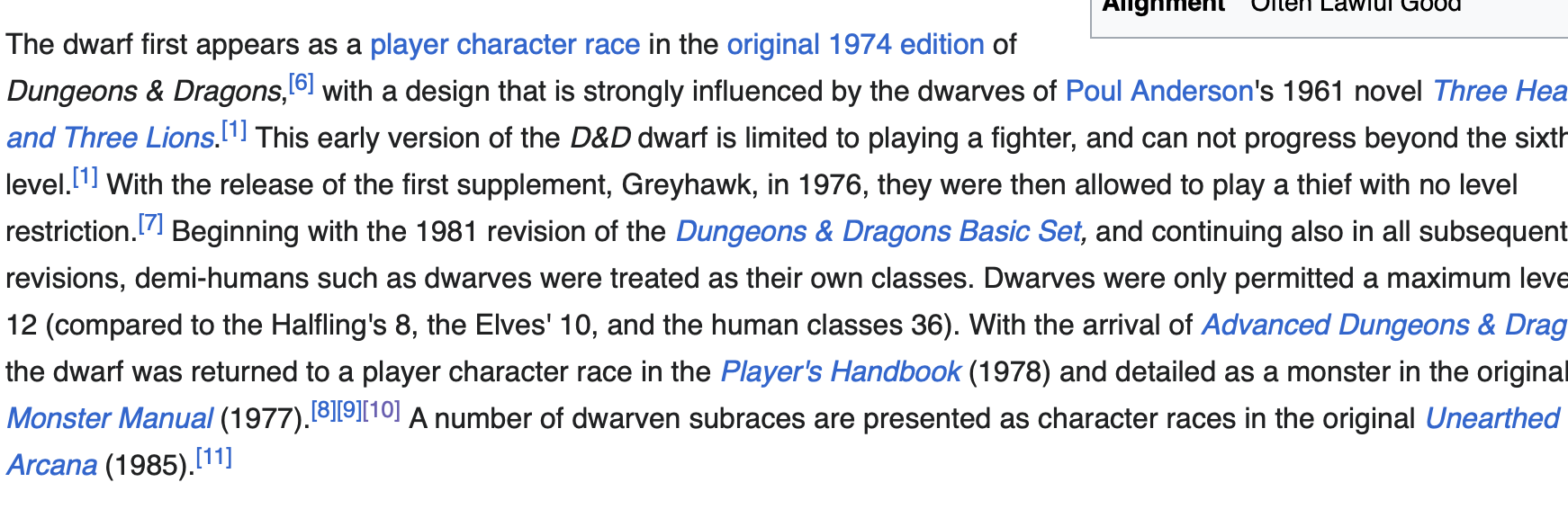
Whereas, Pokemon, while having racial abilities, also have characteristics that can be groomed over time. This aspect is similar to Dungeons & Dragons.
Where the differences start, is with diversity being enforced at the level of a living being.
It makes intuitive sense that a snorlax, is thematically snoring, while also serving as a mass of offense and defense if required.
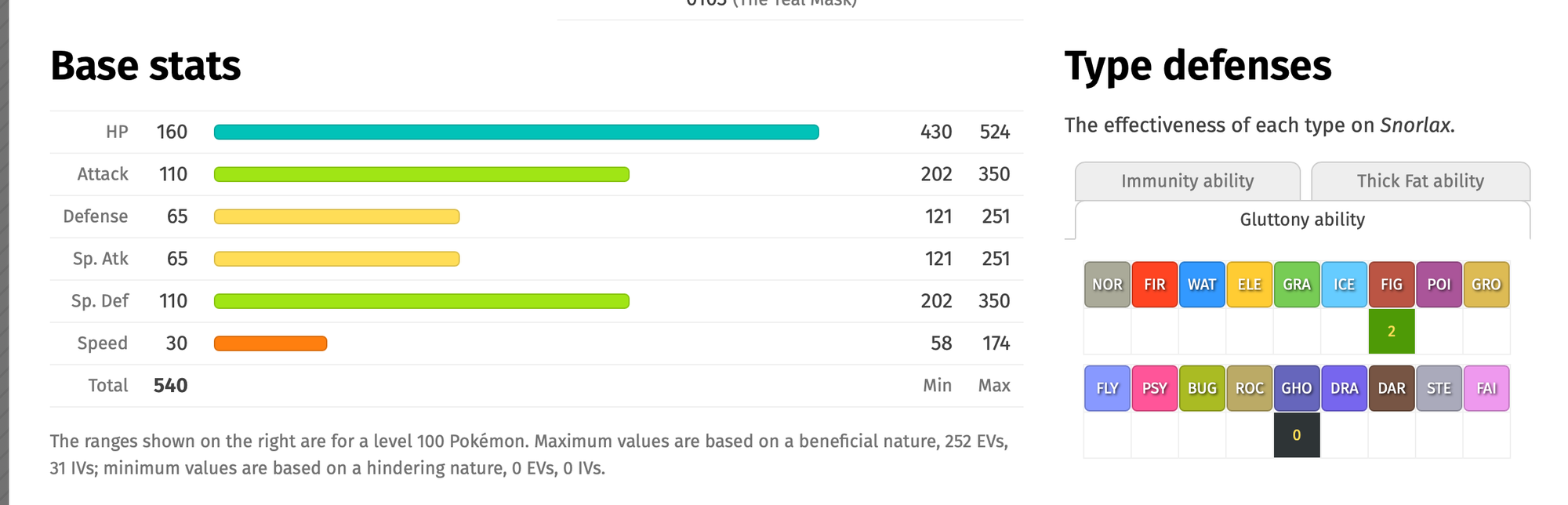
But it's low in Speed. Little can change this, though it makes for interesting tricks and bypasses.
In western magic, the wielder trains to grow within an existing syllabus of what's allowed and not allowed. A person can be whoever they choose to be.
In eastern magic, if you eat a lot, and sleep a lot, the game designer gives you high Health, great Attack, and very low Speed.
An angry young man can temper his anger, to be a fine servant of God, and serve justice as his right hand!
But a snorlax will always fundamentally be a low-speed Pokemon. It's a take it or leave it at the fundamental level of the game. Weight loss is not required; his makeup is a feature, not a bug. You just need to know how to use him.
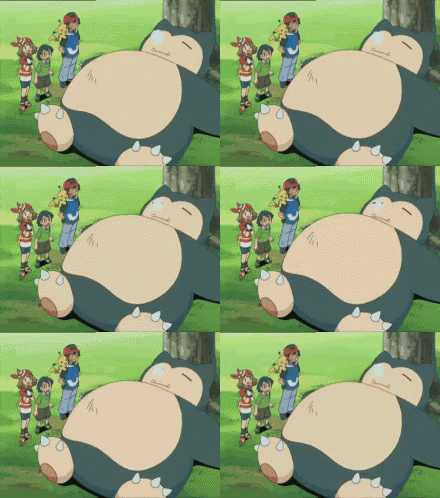
Snorlax's thick fat, makes him harder to kill by Fire and Water Pokemon. So in combination with other Pokemon, Snorlax becomes a wall that's hard to breach; 1 Rest (a move) restores all of his HP, and makes him sleep for 2 turns.
This can be offset by making him hold food that wakes him up, once.
Even then, with HP like that, who needs speed?
You can simply recover when you get tired, and attack when you feel up to it. Despite being slow, his abnormally high health and special defense, requires the opponent to attack a lot.

Western magic imposes standards on the magic wielder; eastern magic expects function, through any form.

Personality and Magic
A lot of anime have links between the personality, and the magic system. Often, even the same interpretation of magic, can manifest differently for different people.
How a character solves a problem, matters - both from a plotting perspective, but also from an entertainment perspective.
We won't expect Charlie Chaplin and Rambo, to solve the same problem the same way.


So when the personality and magic are linked, we see creativity at the level of the character, solving problems, which tends to be both intellectually stimulating and interesting.
This outlook is contrasted with Western magic systems, where a spell is often repeatable between people, or the barrier to entry is either specific (you need to pass a test), genetic, or there is a world wide "system" students need to learn to leverage.
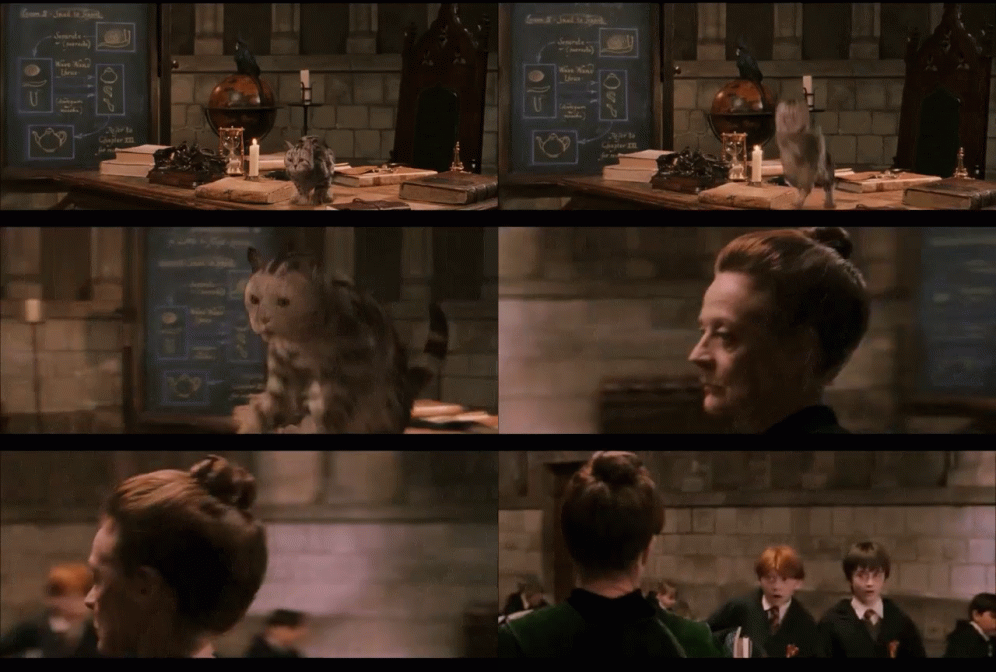
Using Harry Potter as an analogy, anime's magic can often be compared to how McGonagall became a cat, while Harry's dad became a stag.
This is more the norm, than the exception, in anime, where difference is celebrated.
Books like Harry Potter, are meant as an expression of escapement, but are still emotionally valid. Harry Potter is an orphan; that commiserates orphans (hopefully) but also children whose relationships with their parents are not strong.
There is no 'Parent Conjuring' spell; J.K. Rowling shows us a world, where an outcast finds meaning in a world that most people don't know.


In the anime I like, the skills and techniques developed are very closely linked to personal preferences, biases, past trauma, wishes, and unresolved feelings.
By shifting the focus of emotion to the character's themselves, in addition to interesting magic, we get relatable characters, who don't get along with each other initially.
Another pattern in anime; a child grieving a lack of parents, is paired with a child who is gifted with perfect, rich, but cold, parents.
This makes for a richer and more engaging drama, even in non-fantasy settings.
Like a neighborhood, simple girl falls in love with a rich, spoilt boy.
But not a neighborhood girl falls in love with both a vampire, and a werewolf, and can't say a solid no to either.
For example, while you may not have a 'parent conjuring' spell in anime, you might have an infantile character, that looks weird, on purpose.
And his magic will be linked to his perspective as an orphan, in a Freudian sense.
In western magic, the writer's perspective can project their views of the world, onto the media. So, the characters exist in the frame of a stronger literary exploration.
For example, Tolkien's Catholic inclination, explains the role of the Ring, as a tempter.
Though, not necessarily, Boromir and Faramir; maybe, that's just good writing from the perspective of an ignored child.
Boromir blunders and dies like an idiot. Denethor is angry.
Faramir: You wish our roles were reversed.
If this movie were an anime, whenever Boromir would die, Faramir's sense of justice would bring him back from the dead.
Boromir and Faramir's sense of right versus wrong, and personality contrast, would be the magical contract - to kill one, you need to kill both.
One is strong, and the other is right.
See this scene from Lord of the Rings: Brotherhood of Gondor. It's an anime movie, released in 2201.
Faramir: Father!
Boromir has charged the front lines again.
Lord Denethor: Nani?!
Bakemono. He isn't going to make it, even with a sword blessed by Mithrandir.
I wish he was smarter, sometimes.
Faramir: Let me go, Father.
I will be his spiritual axis.
I will provide the IQ, common sense, and wisdom he lacks!
Lord Denethor: Very well. Make haste!
You both will serve as Gondor's Light and Sword; while one is alive, the other can't be killed.
Thusly, I bless you with the power vested in me as Gondor'skingSteward.
Meanwhile, in Mordor.
The Eye: I sense a change in the void. Our enemy is getting smarter.
"Make sure each Nazgul is accompanied by a necromancer, in the name of the Eye."
.....Why didn't I think of this before?
Magic and Unresolved Feelings
The idea that powerful feelings can shape reality, becoming great ground for spells and techniques, is another thing I like in the anime I see.
Often, from a character development perspective, these powerful "feelings" are also acknowledged by the narrator as maladaptive, unhealthy, or unreal in some way, though not necessarily judged.
For example, a character whose parents were run over by a car, might develop techniques that enable steel conversion on demand, in the case of another car crash.
Instead of grieving, the grief itself will manifest as a transcendent ability.
See this scene of Magneto suddenly being able to bend metal when his mom was shot. His rage from tragedy, and his ability, is linked - it's the literary equivalent of giving a child a gun to solve his problems.
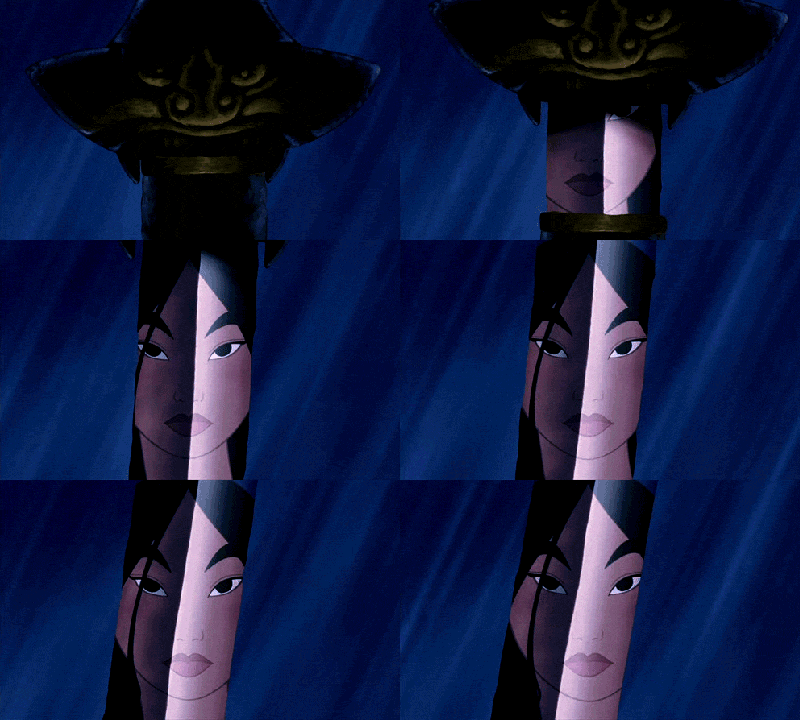
Or a child stealing their parent's sword, to do things their own way, but in this case, a magical dragon is involved. Mulan is a teenage drama disguised as a heroic fantasy story.
In Harry Potter, the correct feeling is a prerequisite for spells. So a killing spell needs to be accompanied by hate - annoyance is not enough, or even sadness. Malice, only intense malice, triggers Aveda Kedavra.
That also explains Harry Potter surviving Voldemort's killing curse in book 1; though it wasn't free. Here, the mother's love over wrote Voldemort's hate, which is an underlying theme of the series.
In anime, feelings are not just fuel, or an explanation; they're the backbone of understanding the character, his abilities, and her outlook in life.
You can't separate either, without the other falling apart.
So, magic in Anime serves a dual role:
- Understanding the character's background, and motivation, in the literary sense.
- Giving the viewer an explanation of what the character can and cannot do, so the magic system can be enjoyed by fantasy lovers like me.
Western magic has a magic training arc, and character development arc. We don't expect Aragorn to do magic, but his leadership is nothing short of magical. Similarly, Gandalf's death makes sense, from a magical perspective, as we know he is a wizard.
In eastern magic, a person making a contract with the devil, is doing dark magic - though we expect nothing less if he wants revenge, and his parents were killed by bad people.
Magic is already accessible to all; his trauma opened the doors sooner than most.
When he no longer wants revenge, his magic also dies with him, signaling both a character arc shift and magic style shift.
Conclusion
Do you notice these patterns too?
Does a timid personality have defensive magic, and do aggressive personalities become weapons on the battlefield in what you watch?

Do you prefer normal characters that aspire to be perfect despite worldly challenges - or characters who are obviously imperfect, re-inventing the world in their image?
Do you like characters, where what they go through, in their life, becomes an obsession that manifests in a magic style?
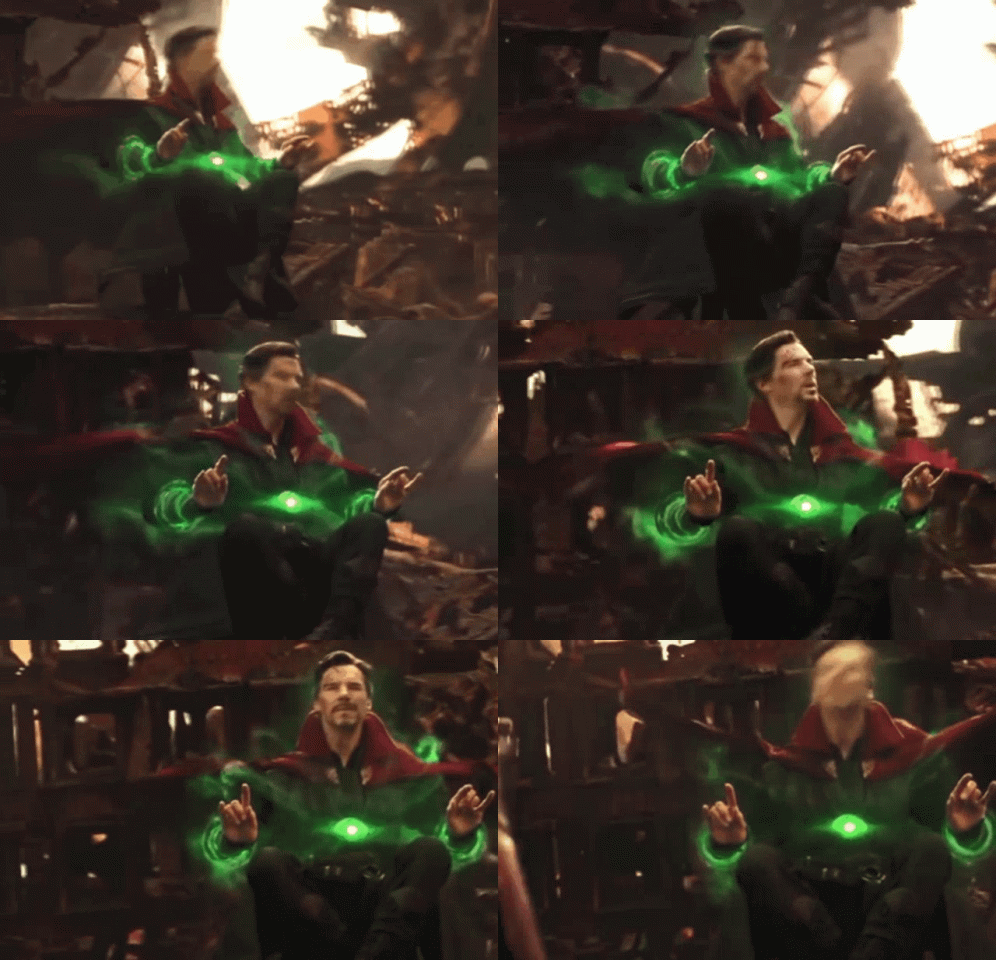


Or do you prefer worlds where all characters have equal access in theory, but the hero has some handicap we can easily understand - class, gender, creed, or religion - that becomes an obstacle to their dream of magic?
I am thinking of Name of the Wind, Elder Scrolls, and Dungeons and Dragons for the above; magic is studied, just like engineering, and eventually, anyone can graduate with a realistic understanding of the magic in their world.
Do you like worlds, where character's fantasies, can manifest in magic? This happens a lot in anime.
Studying their magic, is studying their character, and both are flawed.
Just look at how weird Exeggutor is.
It's Eggs that kills.

Or do you prefer worlds where characters and their magic are distinct from each other?
For someone not noticing these patterns, I can see why anime can only look like a bunch of weirdos with colors, with questionable morals and lots of fan service.
Quite a few creators expect the audience to plumb their worlds, and overthinking is often rewarded with links and explanations that justify certain dialogues, action choreography, or humor, in hind sight.
Western magic, in western media, prioritizes looks and character design, with the underlying idea that the writer decides what's OK magic, and what's NOT OK magic.
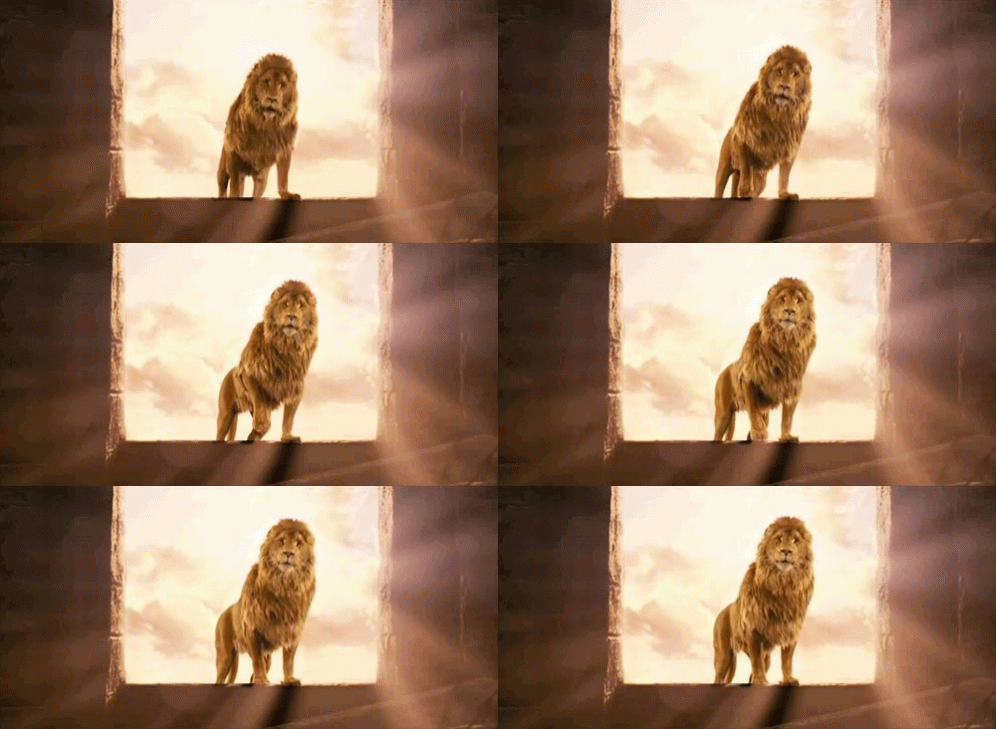
Even comparing Aslan to Jesus isn't that complicated; it's quite simply what C.S. Lewis had in mind.
The reason Aslan is a lion, can be cultural (bravery, strength, and nobility), but also religious (Christian iconography) and personal (he was a Christian).

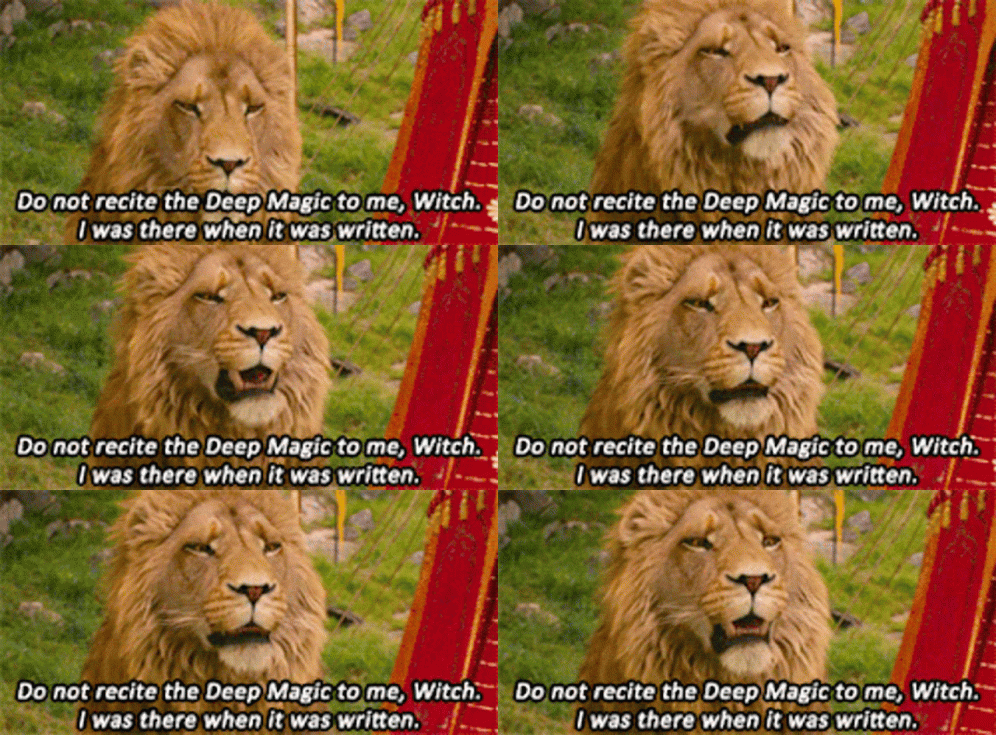
In anime, characters decide what's OK, and not OK, for themselves. The writer is often invisible, and only a narrator.
So, a Catholic character of temptation, a Narnian Christ-figure, a swordsman, and a witch, can all be different characters - not symbols, or plot devices - just 4 weirdos trying to figure out the meaning of temptation, bravery, kenjutsu and magic together.
Satan, Christ, Miyamoto and Sabrina walk into a bar, and ask for drinks. Christ and Miyamoto abstain.
As the bar keeper is filling their drinks, a fight breaks out.
As the designated heroes, Miyamoto and Christ get annoyed, and attend to salvation, while the other two get drunk on Vodka.
Maybe that's why the characters in anime, seem coupled with their costumes; the costumes carry a level of detail like on a stage, that is weird in western media.
Sometimes, you will see Aragorn in bad clothes, like when he falls off a cliff, or dressed like a king, when he wins.
But like a cartoon, Fuhrer Bradley always wears a Nazi-like uniform, or a military issue shirt - it conveys a cultural overtone of dictatorship and (sometimes toxic) masculinity.
Have you ever seen Snorlax not fat?
Like a thin Snorlax, or an over weight, obese Snorlax?
Or a not-cute Pikachu?

Feeling first creation, or order first creation - what kind of world do you want to create?
Member discussion