Most Recent Confusion
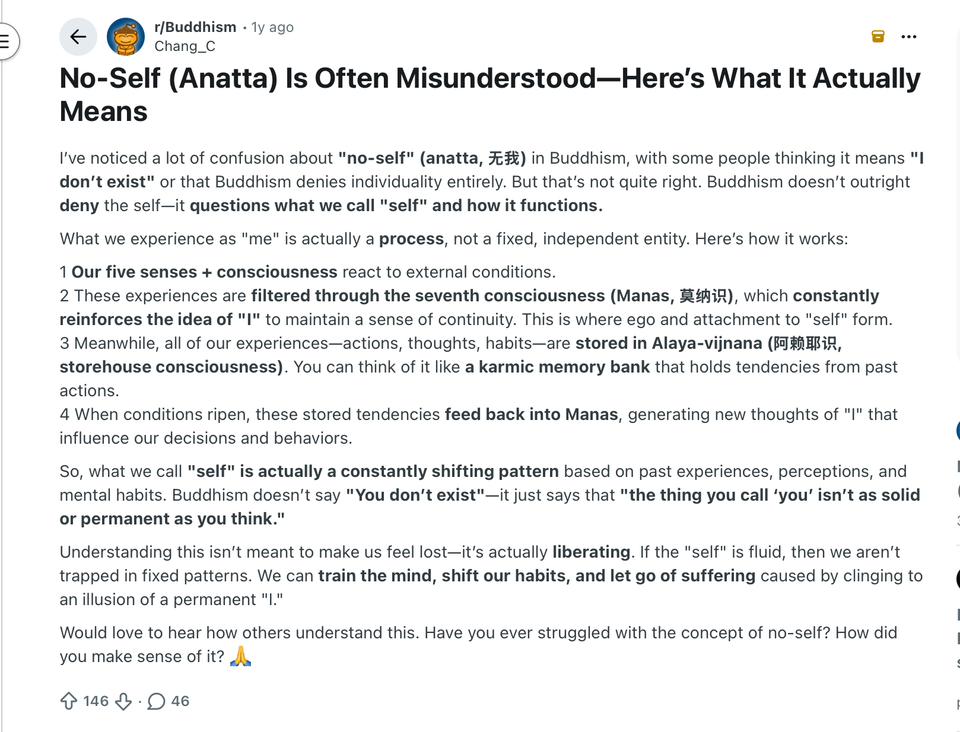
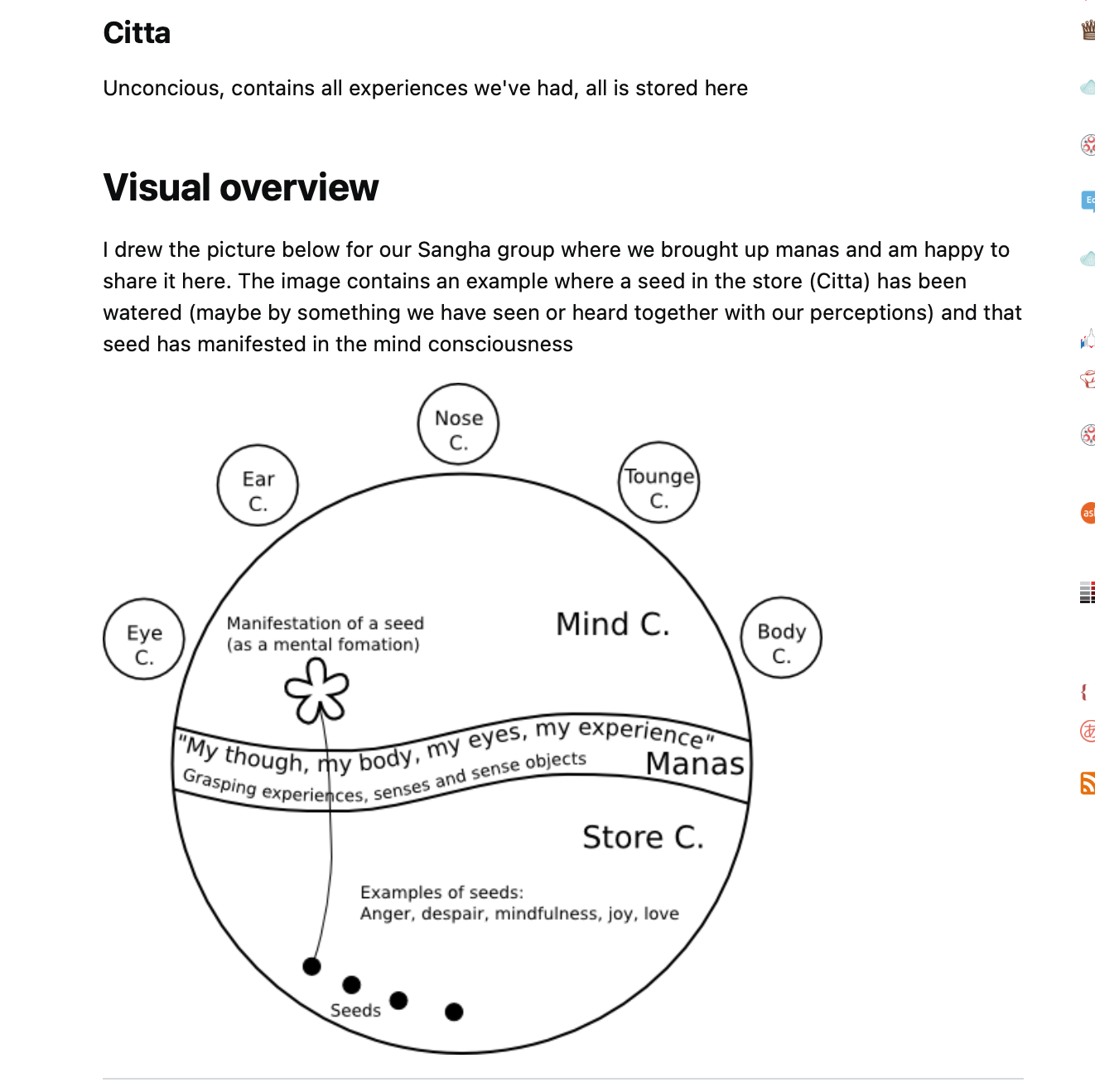
I've been researching Alaya-Vignana. I've been wanting to know what lies beyond enlightenment, especially in the mind.
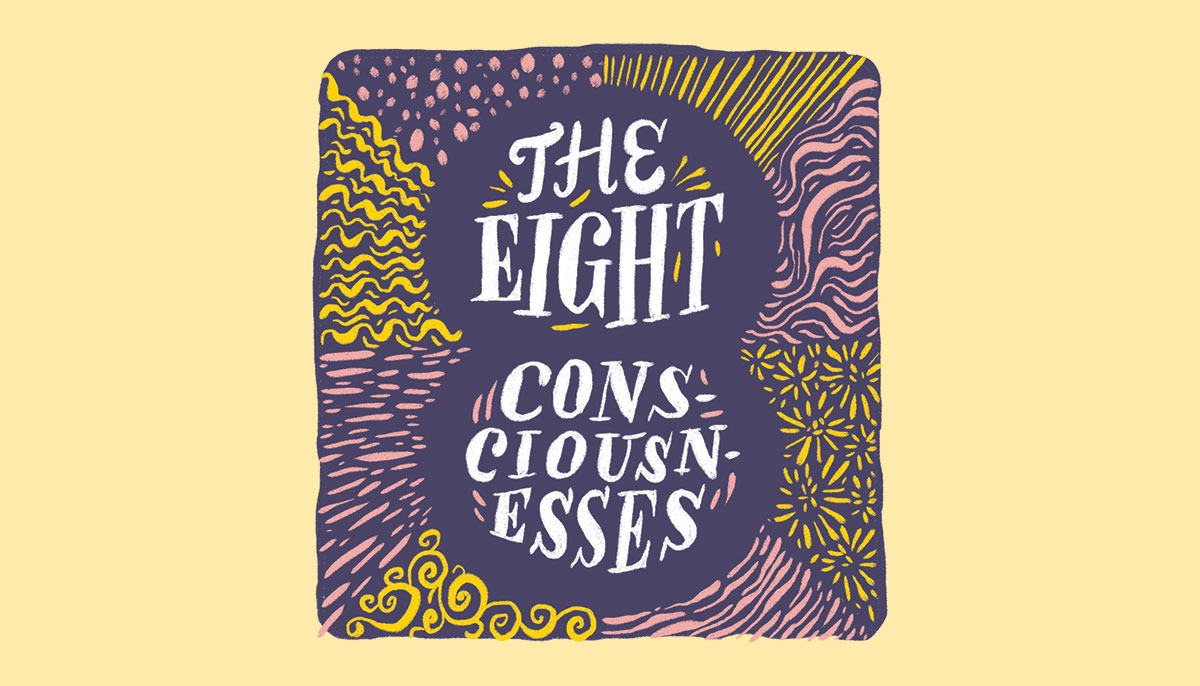
As such, the above picture is something I got from this link.
Say, it makes sense to me that post enlightenment, the Alaya-Vignana gets emptied of unskilled actions (bad habits) and bad karma (harm caused to self and others) in the process of engaging.
So the practitioner develops a deep but simple understanding of cause-effect (karma), applies such understanding to self and everyday life, and realizes that while all karma is finite, positive skilled fruit has the least samsaric tax.
Then, with an intention to not regress back towards samsara, clinging doesn't happen, so no more craving, and without craving, there's no motivation to seek aversion or desire.
I understand that some people can move to that state, and are not beyond karma, but are self aware enough to reduce clinging and craving. Not because they have to, or because they feel like it, but from an experiental place that it doesn't make sense to keep pouring water or alcohol on fire, especially when we keep starting our own forest fires.
Say it makes more Dharmic and Buddhist sense to be understanding of the fire itself; why it is so (Life is suffering), where it comes from (attachment), and what it does (theory), and how to relate to it (everything else in Buddhism).
Coming to my confusion: if Alaya-Vignana is a store house consciousness, then where does that Alaya-Vignana come from?
When my mother read to me as a child, apparently I kept wanting more stories to be read to me.

So Post-enlightenment, do I just retain that sense of 'I like this' and 'It would be nice to have more of it, wouldn't it?', without getting attached to it, taking action, craving more, clinging to the annata of a writer, and making the next 30 years of my life all about curiosity, entertainment and fantasy?
If yes - then where did that child come from? I think that child is just a mixture of the 5 senses, and consciousness.
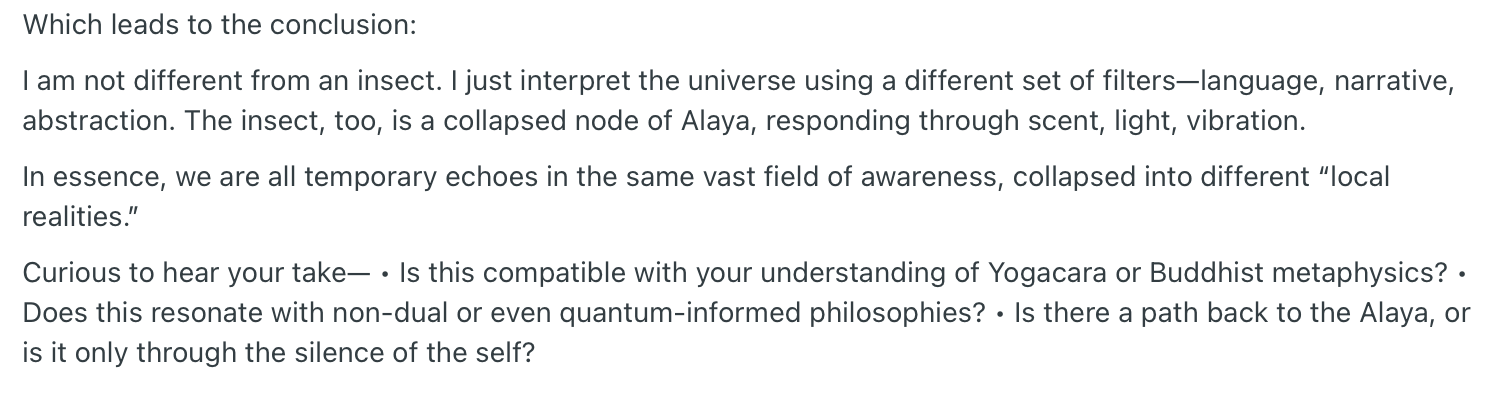
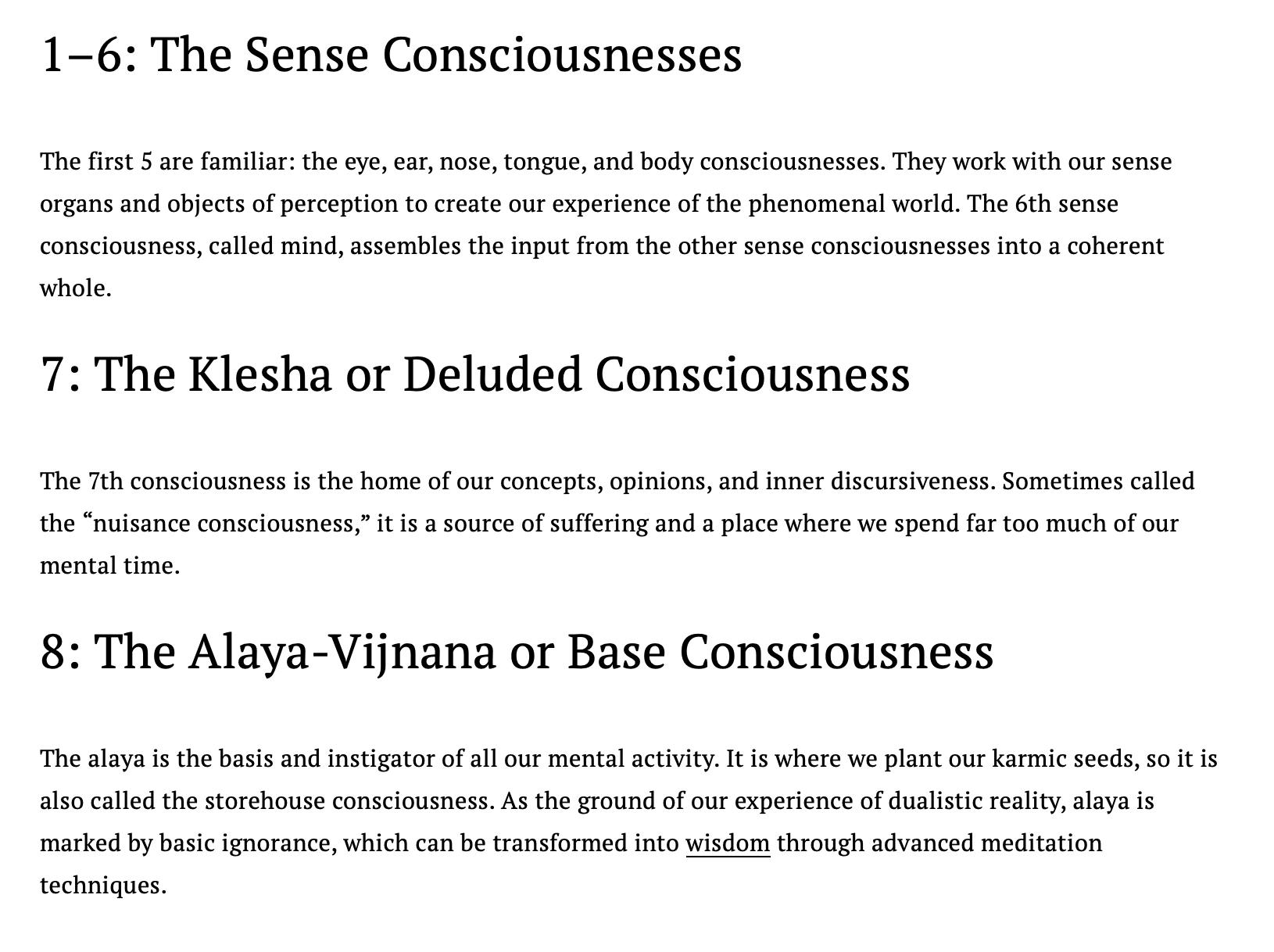
First snippet is from Chang C, on reddit. Second is from Lion's Roar. You can find links to both in the 'Further Resources' section.
Just like insects don't like to be treated badly, baby Suman likes to interact with his world in a way that he could. That sounds like all babies.....if a baby is born blind, I am guessing it makes an auto-switch to ears, without making a big deal about it (before joining society).
After going through a chiropractor treatment for 9 months, and being in so much pain, I'm amazed at how babies don't make that much of a mess, even though they have to grow kneecaps to walk.

This makes sense to me - both in the desires I had as a child, and in my interactions with every other child. There was no conditioning, no attachment, or craving in my childhood - if there was, crying or yelling provided the karmic release of letting go.
Ethics were simple - don't be a jerk, help someone not be a jerk, being a jerk is too much work, and try to have a good time.
Calling someone an idiot, a loser, or talking too much, was more self expression, acceptance, confusion and a desire to cognize the new reality, rather than a malicious, egoistic, or conscious choice to degrade someone else's reality.

So while the Alaya-Vignana is weak (or 2 years old), so is the clinging and craving. I am guessing this flips in adulthood. That is, every adult "knows" what to do, and constantly regurgitates patterns seen, understood or felt, without realizing that reality itself does what it wants, and patterns are just a shortcut.
The same adults become creatures of habit (new anime came out), have rigid selves (I want to be the best writer), crave (ice cream), cling to habits that involve stopping by Baskin Robbins, and then workout to avoid bad karma.
While all children were bland in their needs, maybe how every child responded to stimulus defined their relationship with the world.

So, looks like at our most basic level, post-enlightenment, we are humans that respond to things in a way a human would, and specifically, the human that you are.
Enlightenment gives the following:
- A deep understanding of karma
- The habits to access that understanding.
- The realization to use that understanding in a positive sense.
- The power to address wrong, lack of skill, and correct ourselves.
- Say, Reiki, or Asta Siddhis.

It doesn't really pay for the light, buy you candles, alter the route of the Sun, or even offer a matchstick.

It just helps you see in the pitch back of night, that before you were the person who sought things and acquired good skills and bad karma, you were the child that started on this journey.
That child is still there, making choices. This child is the essence of who we are, and awareness of it doesn't mean the price of buying candles goes down, or we won't need money to light candles.
It does put the fear of darkness in a healthy framing, question the need to always avoid the boogeyman, and asks whether it makes sense to check everyday for the boogieman. Empathy for our monsters removes fear. So peace of mind is definitely a by-product of enlightenment.
I thought peace of mind was the goal.

Anything on top of that child is just further karma, good or bad.
A material victory (Nobel prize), more words, more finished books, are all skilled and positive karma. Not really necessary in any way, though it may help someone or I may like doing it.
Not writing, not having money, and playing too many video games are unskilled or negative karma. Probably a bad idea.
Beneath all of that, is just a being that likes to have a good time, just like snakes like to eat rats, and dogs like to bark.

It's just hard to see that when you start out on a journey of aversion, suffer a lot, and you also like to acquire the skill of poesy.
But once you do, it feels like you have become that idiot you were always trying to be and avoid at the same time.
Somewhere, sometime, someplace, skill accumulation becomes aversion of life and attraction to perfection.

If my understanding of reality is correct, then realizing one is an idiot, has huge neuroplasticity implications.
If it's weird that I am who I am just because my mom read books to me, my mom was educated, I knew English, and English novels had access to a lot of knowledge across generations - then, on the flip side, replacing any thing I just said with another skill or trigger, can make me proficient in that area.
Like, anything.
Like I pick up a stick, play with it, and watch YouTube for 20 minutes, 5 times a week. 5 years later I can stick.
The flip side of being an idiot is unlimited potential.


The same thing that always wants to hug, can become something that transcendentally protects the concept of hugs.
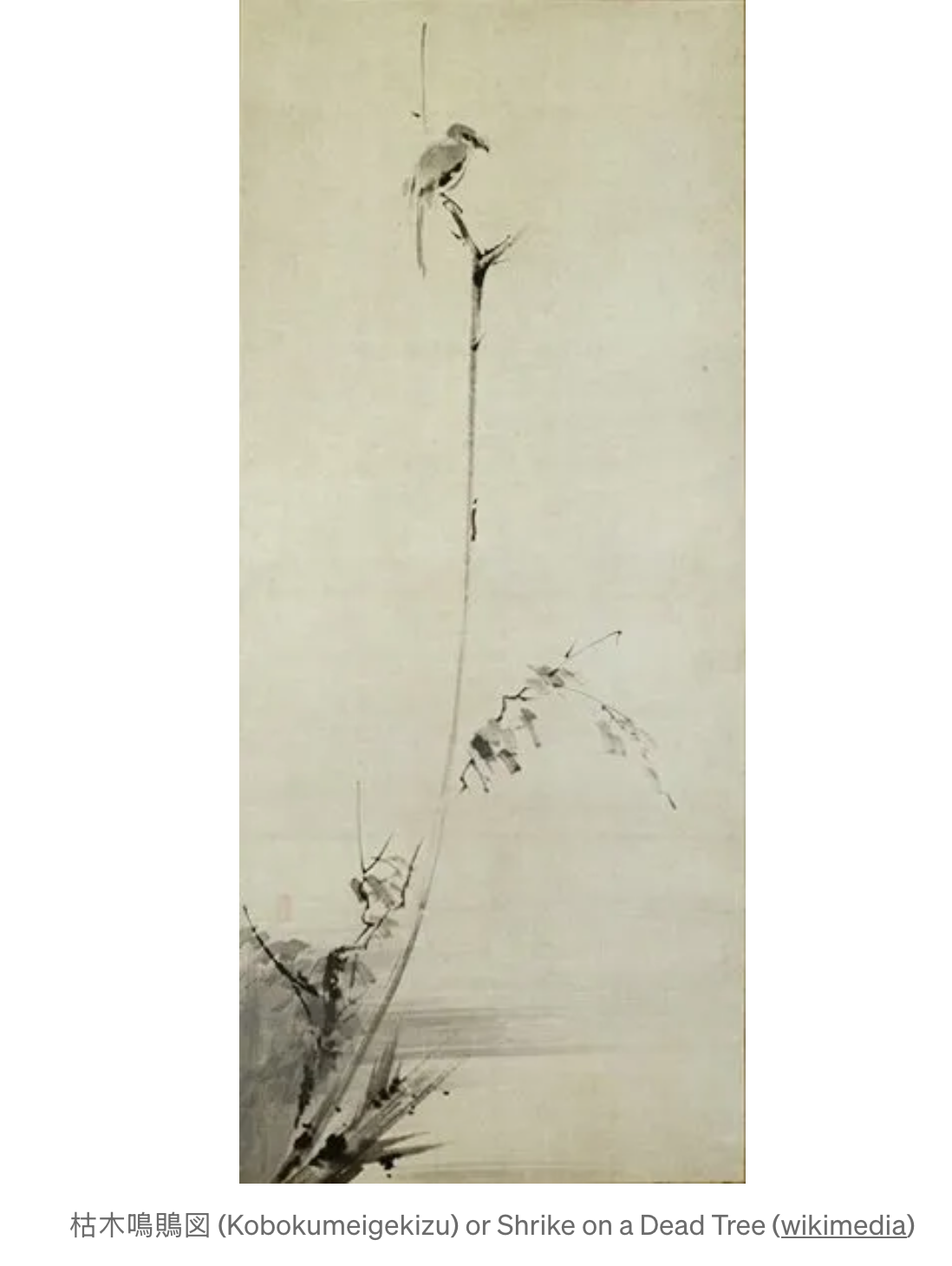
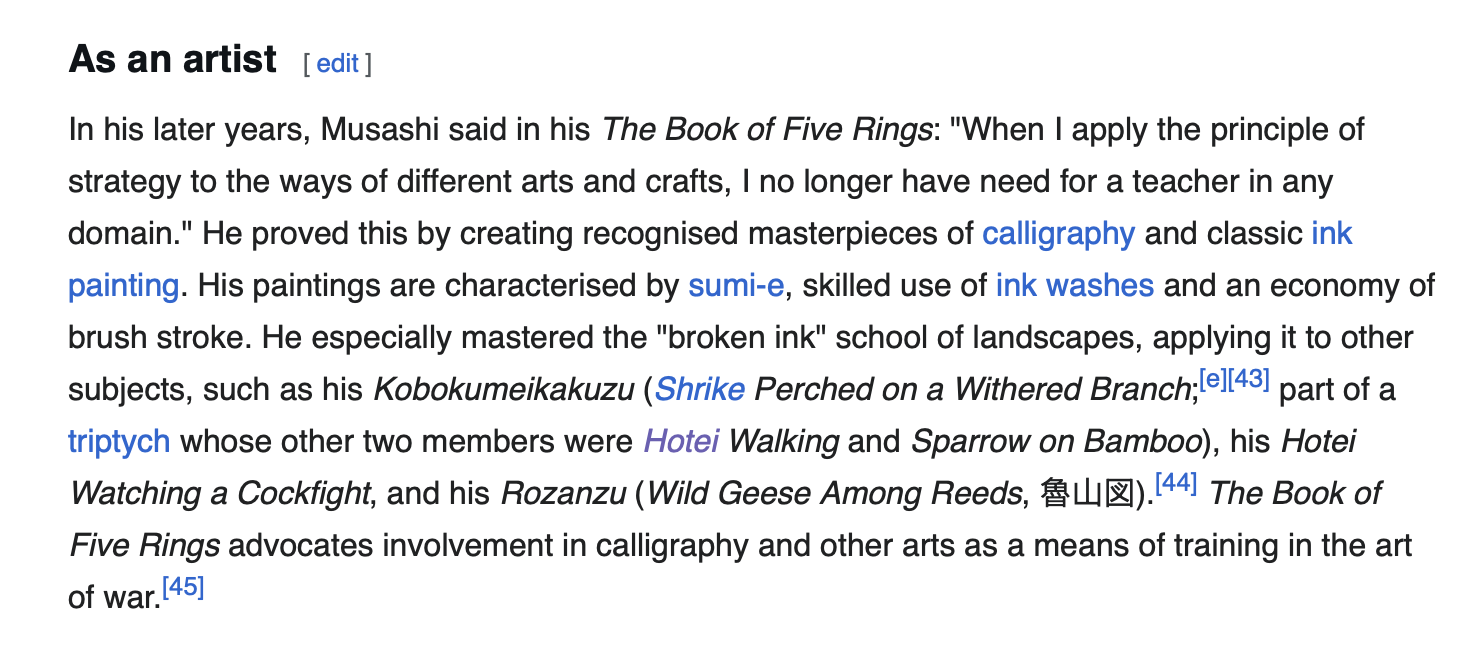
If you don't believe me, because I am saying it, believe Miyamoto Musashi.
The guy who won 60 duels, did this painting.
Further Resources
Highly recommend them.
 Brian Campbell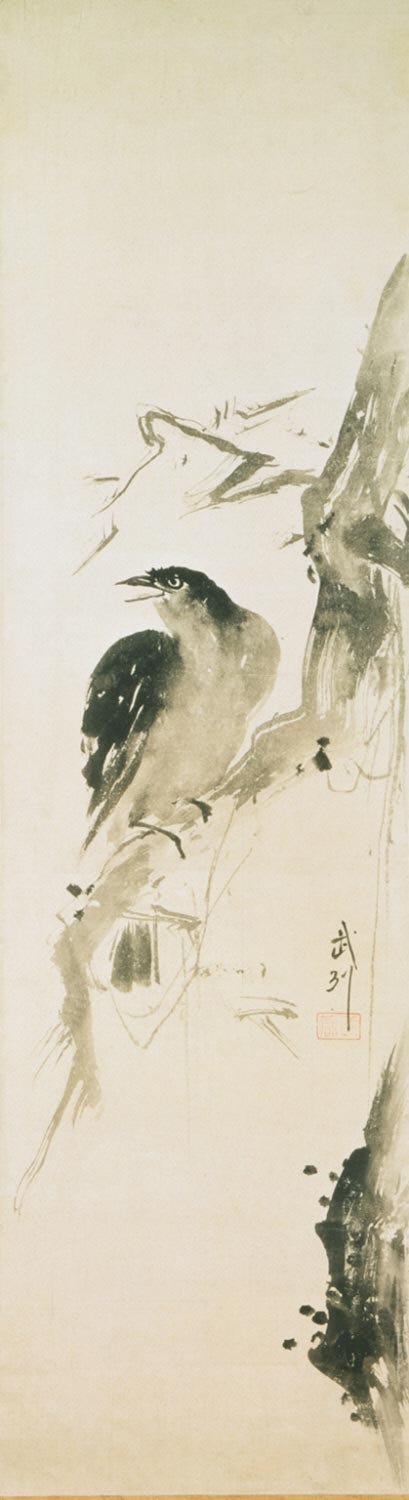
 user2512
 Brent
Brent

Zazen: manas and alayavijnana
by u/chintokkong in zenbuddhism
Contributors to Wikimedia projects
 Contributors to Wikimedia projects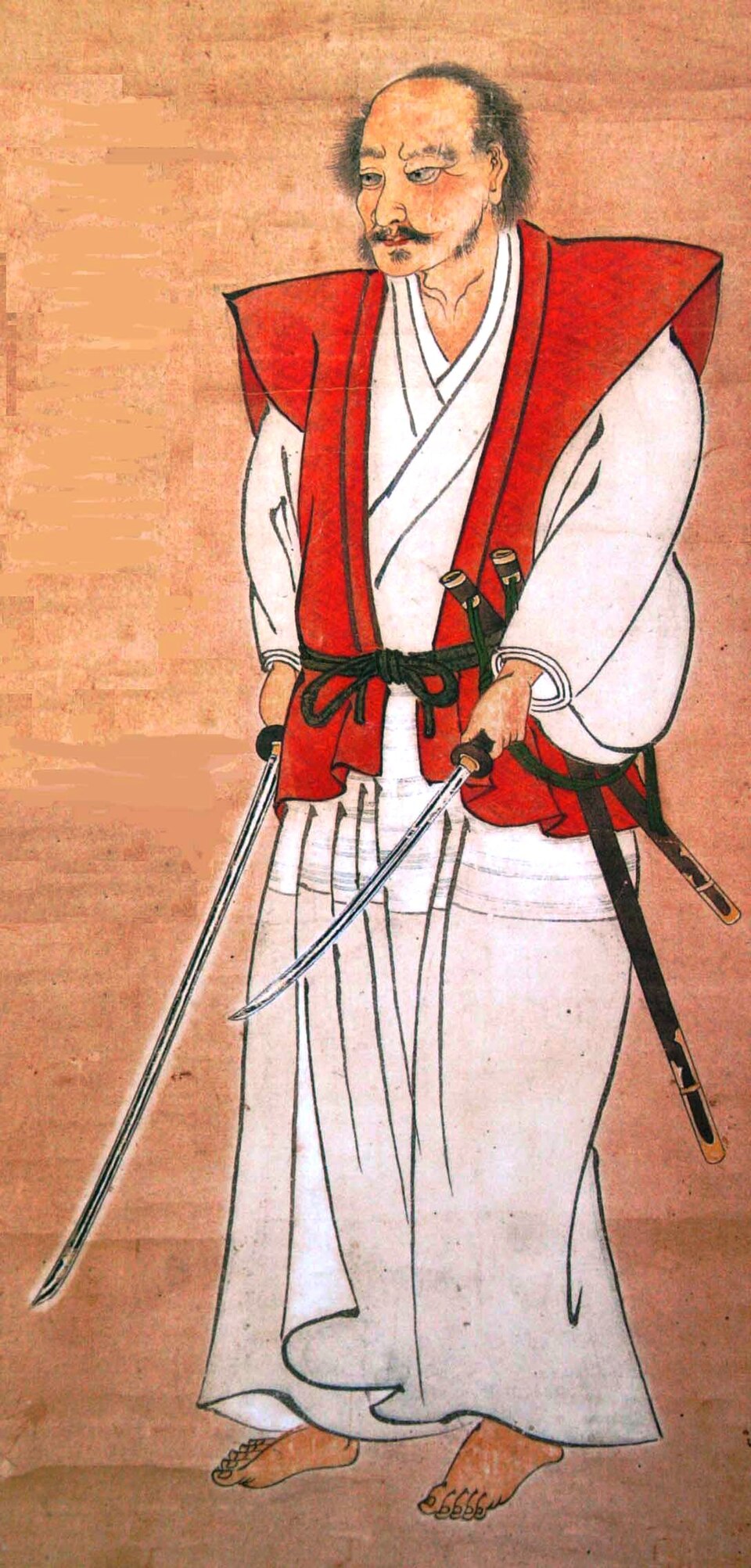
If the Self is a Collapse of Alaya-vijnana, Then Time, Body, and Individuality Are Just Temporary Echoes
by u/Chang_C in Buddhism

 ChrisW
 Crab Bucket 21.2k1212 gold badges6666 silver badges181181 bronze badgesuser17652Doubtful MonkGondola Spärde
 Contributors to Wikimedia projects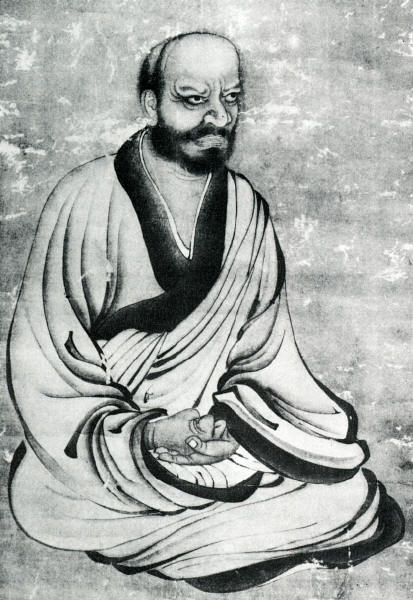
Member discussion