Warhammer 40,000 - Mindset

Hello!
I finally bought the core rules of Warhammer 40,000 this year. Looks like I bought the rules just as 11th edition started.
I also started buying into the Old World, which brought back memories of wanting rank and file.
I did a good job of reading a lot, and confusing myself, until I realized what the God-Emperor wants me to see.

Essentially, I think right now, this is how you need to think:
- The rules have players go 1 turn at a time, with minimal interactions. Chess does this.
- Each turn has phases, that happen linearly. Sometimes, some steps will repeat in cycles, just to make sure all cases are covered. Fairly common in CCG games, not so much with regular playing cards. Engineers, think loops.
- Each phases allows you to do things, or not do things. This is how rules work. Engineers, think compiler.
- Just because the phase allows you to do something, that doesn't mean it's a good idea to do it. I'm guessing knowing what to do comes up with experience and understanding the game over time. Engineers, think logic error, not build error.
- Just because it's a good idea to do your move, that doesn't mean you should do it either. This could be because of how strategy works, and how you see yourself playing the game through, which is linked to #4. Engineers, think great engineering with terrible ideas.
- Just because you make your move, that doesn't mean things will work out. There are 2 important things that matter here - things you decide, and things you can't control. Engineers, think architecture.
- You can decide what profiles, keywords and abilities you have access to. Profiles are the game's way of giving real world properties to a gun, person, or another item. Keywords are the game's way of classifying a gun, as something that's not a grenade, even though both cause or relate to explosive chemistry. Abilities tend to be more thematic or practical, giving a positive application, in the qualitative sense. For example, if there is a gun that works a certain way, the game thinks the gun is not a sword or a grenade, and the gun that was used in so-and-so battle was special, it always wins a 1 on 1, compared to something that's just a gun. Here the idea of being special comes with the ability or keyword....Engineers, think Object Oriented Programming.
- You decide what profiles, keywords and abilities you have access to, by deciding what you have in your army. For CCG players, this is 100% analogous to your deck. So, this means when you buy things, while Games Workshop talks about the Rule of Cool, you might want to know what you buy actually does, why it does that, whether that's what you actually want, and you are still in for a long learning curve, while you try to figure out what's going on.
- Profiles, Keywords and Abilities can come from many places, such as faction choices, sub-faction choices, itemized choices (I want a sword, not a gun for 2 of my people), or stratagems that get unlocked (if you have a grenade, you can throw it!) or detachments (your set of people throw so many grenades, you get to throw 1 more every 2 rounds. You're the bombardiers for a reason!). Again, this becomes apparent as you look for synergies while building your army in theory.
- Once you decide what you can do, dice, your opponent, and the general nature of rolling die, decide what happens after that.
- Last, but not the least - everything is interrelated. So, if your veteran super-solider has a sword, and not a gun, you might want him to charge! (something you can do in a phase), in a phase (see #2) , in your turn (see #1), and you're hoping because he's a super soldier, he has the capacity to do massive damage (based on the profile of super-soldiery, and the ability of veteranship) and you're certain you're going to win. However, the unit you targeted, while mostly killed (based on his profile, and dice rolls, this system has a wound concept), he has a keyword that allows himself to detonate because he's a robot rigged with explosives. So, while he dies like you wanted, he also takes out your super-soldier, which you didn't want, and didn't expect to work out from your opponent's side.
- You now continue playing, and repeat everything from step #1, hoping that what you have (your army), what you can do (based on the rules, the situation, and your army), what you know (from knowledge, common sense, logic, and deduction, probability), and what actually happens, lines up both in your mind and the battlefield.
That's why these games are better understood as daydreaming with rules - they have a strong reality component (big guns hurt tanks more than small guns), fantasy component (laser guns, plasma guns, alien guns), a modeling component (you aim to do something concrete and grounded in this fantasy - something more than just wishful thinking or die rolling), all of which allow you and your opponent to imagine that what's painted on the field, as strong realities colliding, reinforcing, aligning and mixing with each other.
So, if you buy 1 core rules, 1 codex, several miniatures, and see this:
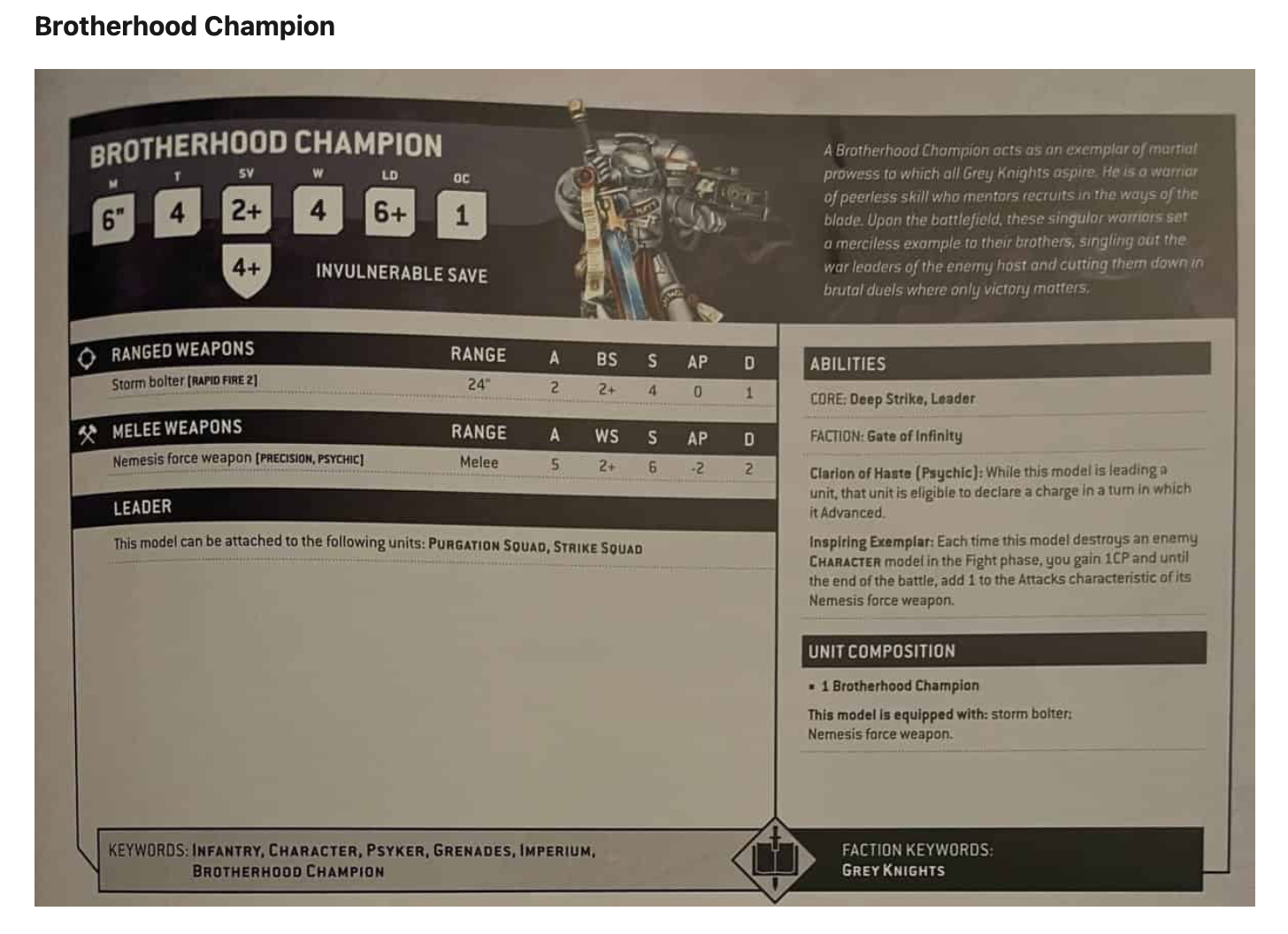
These profile numbers help the game crunch the math, and model the object in "real" life, where everything is measured in inches and 6-sided die.

So, when you buy and paint your models like this:
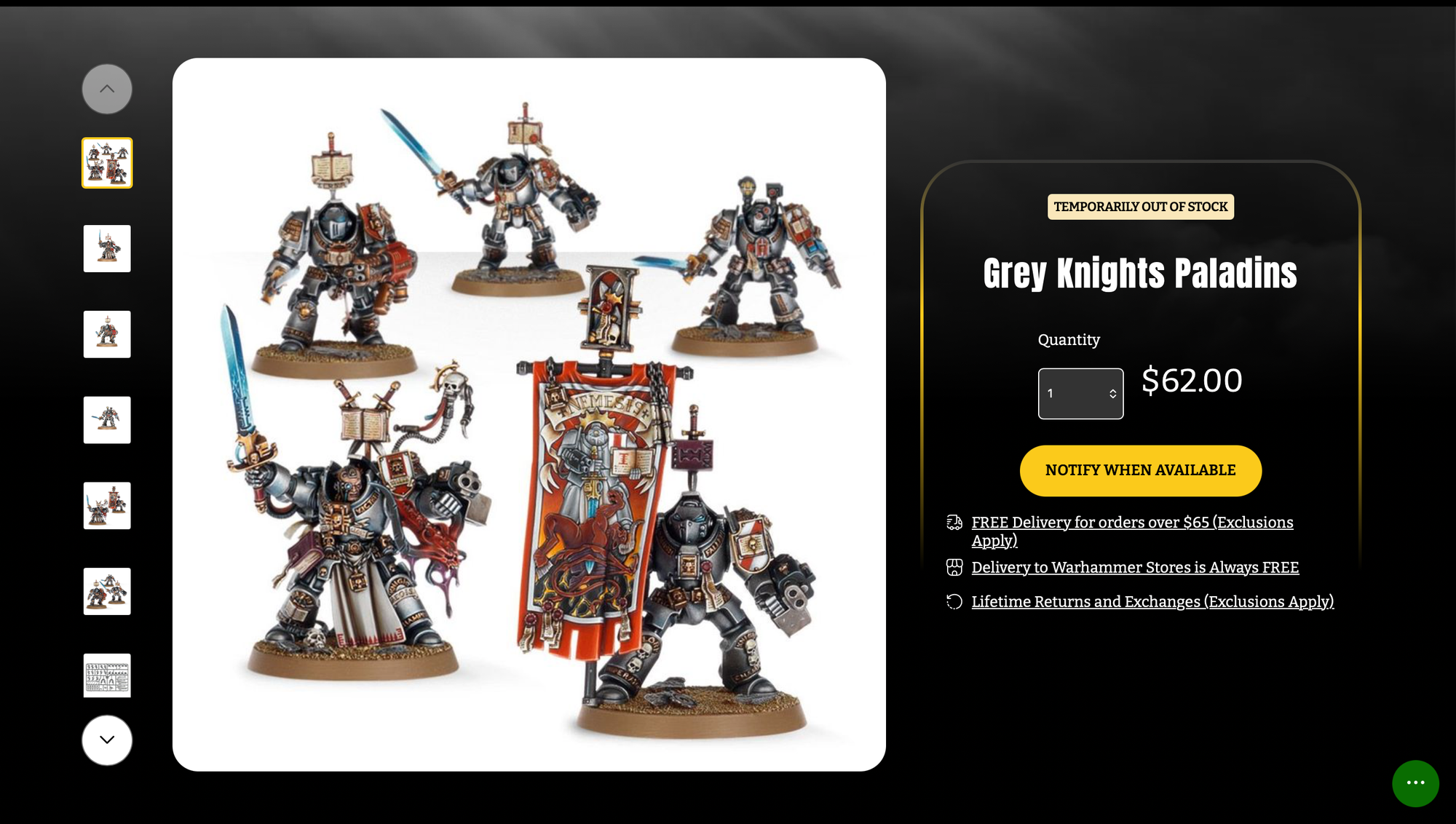
And play with them like this:
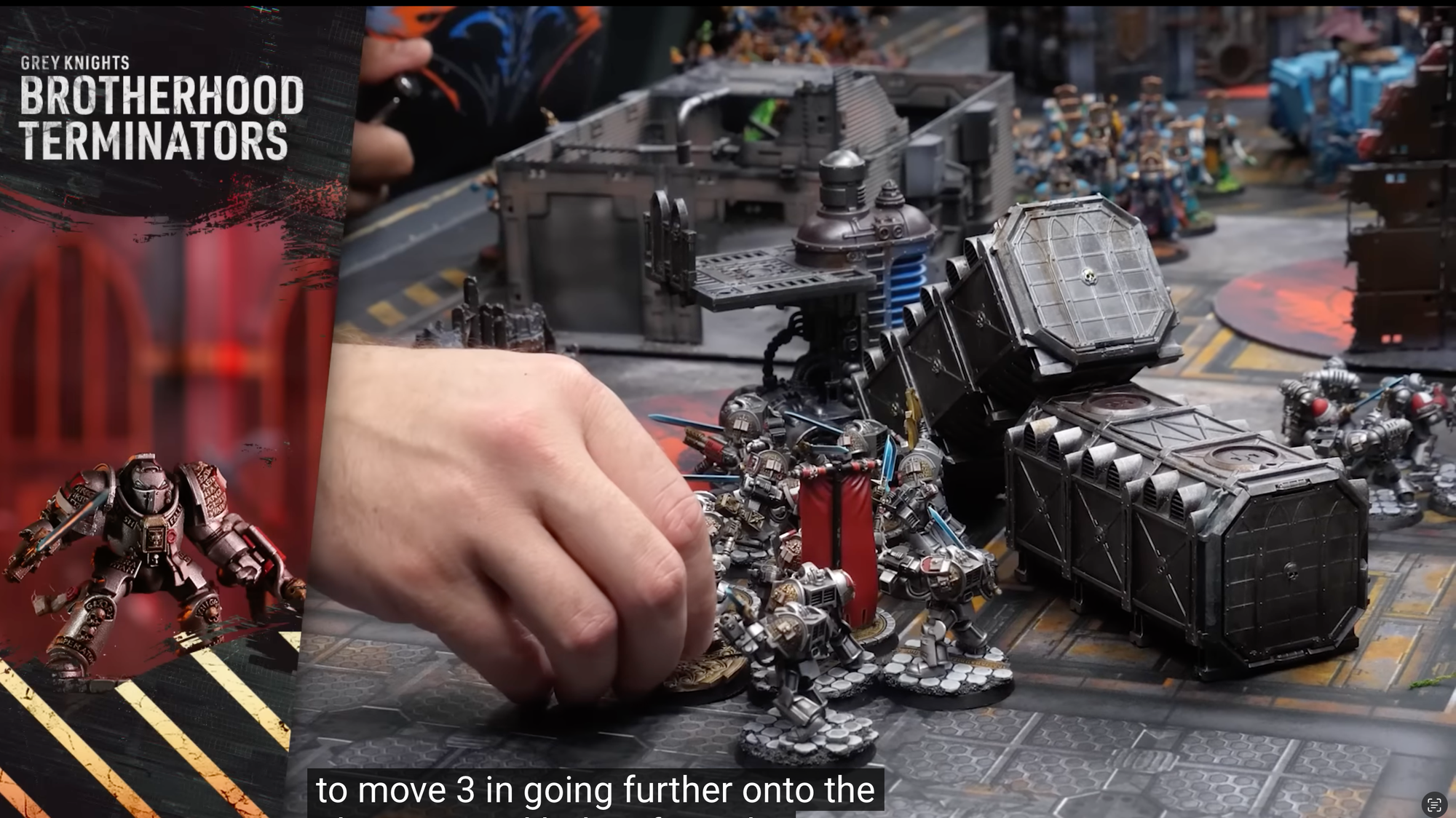
What you "see" is a simulation of reality, in Warhammer, which would be something like this:
Before we had electronics and movies (video games) that could do this:

Member discussion